ZOHRAN MAMDANI JUST WENT NUCLEAR ON LIVE TV: CALLS T.R.U.M.P “A VICIOUS OLD BASTARD BLEEDING AMERICA DRY” OVER BORN-IN-AMERICA ACT._yennhi
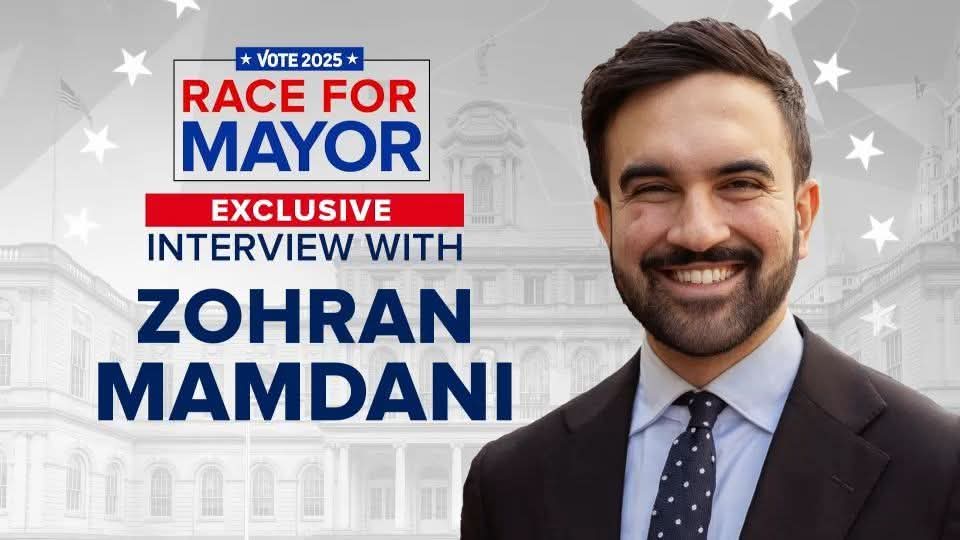
The red light clicked on and the room stopped feeling like a studio. Zohran Mamdani didn’t wait for a question to finish because he knew the moment was already bigger than the moderator.
When the topic turned to Kennedy’s midnight “Born In America Act,” the atmosphere shifted from political talk to national panic. The label alone sounded like a gate slamming shut, and Mamdani treated it as an emergency.
He didn’t soften his words or hide behind legal jargon. He chose the kind of language that breaks decorum because it was designed to break denial first.
The insult at the center of his rant was brutal and unforgettable. And once it landed, the entire exchange stopped being about policy and became about power.
Supporters claimed it was the most honest thing they’d heard in years. Critics called it vulgar, divisive, and reckless—proof that politics has become a blood sport.
But everyone watched, and that’s the point. In modern America, Mamdani framed the bill as a threat to citizens who already belong. He painted a picture of people becoming “second-class ghosts” overnight, erased not by crime but by ancestry.
That framing hit hard because it triggered a primal fear. Not the fear of taxes or inflation, but the fear of losing your name, your status, your place.
He pushed the argument into something personal. “My family was born here,” he said, turning the debate from abstract policy into intimate identity.
And the moment a politician says “my children,” the room changes. Children turn rhetoric into stakes, and stakes turn spectators into participants
The “Born In America Act” sounded like protection to some viewers. To others, it sounded like a trap, a patriotic label disguising a purge.
That’s why the name itself became the story. Before anyone read the text, the country had already chosen sides based on what the title made them feel.
Mamdani’s line about a “racist fever dream” poured gasoline on that divide. Supporters called it moral clarity, while critics called it inflammatory slander.
The truth is, both reactions were predictable. America’s identity debates are never neutral, because belonging is never neutral.
His most viral moment wasn’t the insult, it was the metaphor. He called it “America crucified,” dragging religion, history, and sacrifice into one sentence.
That metaphor didn’t just provoke political opponents. It provoked entire communities who heard it as blasphemy, and others who heard it as prophecy.
Then came the stare—four seconds into the camera like a courtroom pause. In viral culture, silence is a weapon because it looks like certainty.
Millions of viewers interpret certainty as leadership. Others interpret it as danger, because certainty can be the mask power wears before it tightens.
The story’s exaggerated numbers—billions of views, trillions of impressions—were part of the myth. In the internet era, viral math is not a fact, it’s a declaration.
When people say “everyone saw it,” they mean “you can’t escape it.” That’s the real function of inflated stats: to make the moment feel unavoidable.
Suddenly, the debate wasn’t just about Trump or Kennedy, but about immigrants, birthright, and the meaning of American belonging.
People began posting their own family stories. Grandparents, service records, taxes paid, kids raised—each comment turned into a confession of fear.
That’s what makes identity politics so combustible. It doesn’t feel like politics, it feels like survival.
Mamdani’s outburst also sparked speculation about ambition. Was this a moral stand, or was it a launchpad for national recognition? becomes proof of a conspiracy without needing evidence.
Mamdani’s harshest line was that Trump is “bleeding America dry.” That phrase implies not just incompetence but theft of the country’s soul.
Supporters loved it because it sounded like truth. Critics hated it because it sounded like hatred.
That’s the true fallout of viral politics. It doesn’t just inform people, it reorganizes how people see their neighbors
In the end, the question isn’t whether Mamdani crossed a line. The question is whether America has moved into an era where lines are the only language left.
The bill, the endorsement, the insult, the metaphor—each piece became a spark. Together they formed a story that made the country feel like it’s standing on a matchbox.
Mamdani didn’t just speak. He detonated, and detonations always create two things at once: worship and hatred.
That’s why the moment became a war cry. Not because everyone agreed with him, but because everyone felt the impact.
And in a nation addicted to impact, the loudest truth is rarely a fact. It’s the feeling that something irreversible has begun.